
About Me
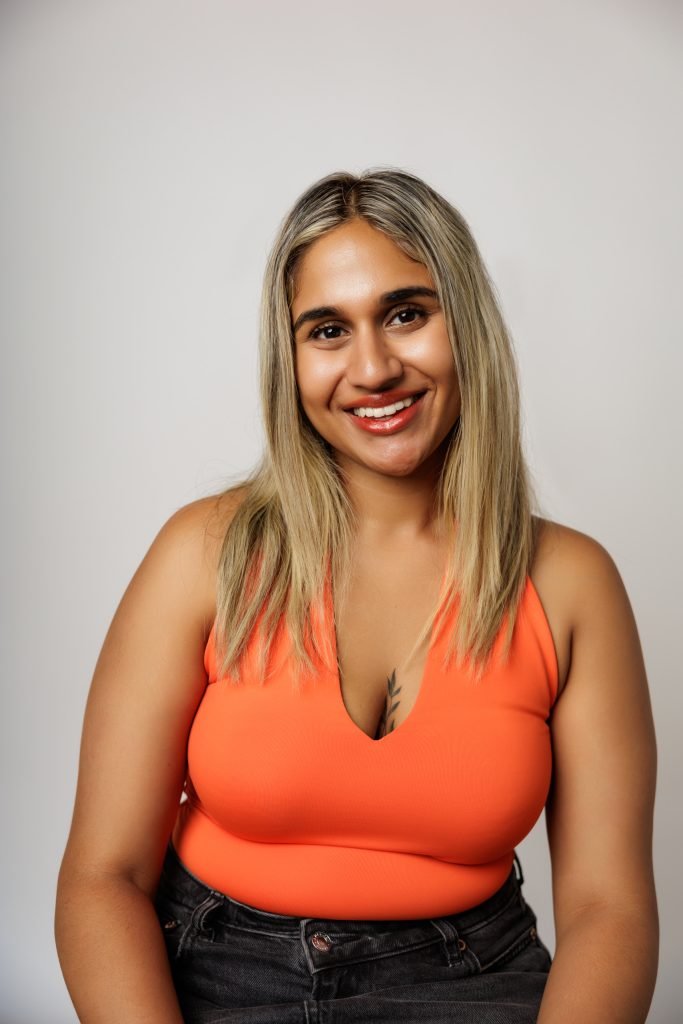
I am a Licensed Mental Health Therapist and AASECT Certified Sex Therapist based in New York City. I graduated with my Master’s in Counseling in Mental Health and Wellness and a dual degree in LGBT Health, Education, and Social Services from New York University. I also hold a Bachelor of Arts degree in Psychology with a background in Women and Gender Studies from George Mason University. I identify as a queer South Asian immigrant woman. I’m also neurodivergent and non-monogamous. Aside from being a therapist, I have volunteered as a crisis counselor for the Trevor Project, worked as a graduate assistant for the New York University LGBTQ+ Center, and helped in the planning of social justice conferences.
I have worked towards being a therapist for many years now and it is my greatest honor to arrive where I am. I grew up in Bangalore, a city in India where access to mental healthcare was limited and heavily stigmatized. We didn’t really talk about sex at all and the patriarchal culture often made it unsafe to embody our sexual selves. During my young adult years in Bangalore, I struggled to find a counselor who had a background in LGBTQ issues. The counselor that I talked to put me in a one size fits all box, bound by a traditional conception of heteronormative binary identities. The services I received seemed ingenuine and I felt alone. The counselor failed to understand the challenges that are faced by a queer woman in a conservative country. At that moment, a strong desire to uplift people who feel confused and alone was born.
My Approach
I approach therapy with the intention to understand and connect with my clients as fellow humans. My own journey as a queer South Asian neurodivergent woman, along with the experiences of those close to me, deeply shape my approach. Building a genuine relationship with my clients is my top priority, as I believe it is the biggest predictor of therapeutic success. As a person of color, I actively challenge oppressive structures that have long been dominated by Western white culture. Jiddu Krishnamurti said that it is no measure of health to be adjusted to a society that is profoundly sick and I do not see therapy as a way to numb the pain that is caused by systemic oppression but rather a way to empower clients to have compassion for themselves.
I view each individual within the context of their environment, recognizing the complex intersections of their various identities. I rely on evidenced-based methods that consider the impact of trauma and are attuned to diverse cultural perspectives. In my sessions, I strive to create a safe space for clients to rehearse for life outside of therapy. Through trust and a strong therapeutic bond, my clients are empowered to make meaningful progress. I also help my clients practice slowing down in the therapy space as their lives are often fast-paced with little time to reflect. While slowing down might be initially challenging, it helps clients move with more intention through the world.